
Artificial intelligence is changing the competitive landscape for businesses of every size. For small businesses, it can be more than another piece of technology; it can become a practical way to close gaps in productivity, marketing, customer service, analysis, and decision-making. This is especially relevant to professionals building modern careers because the ability to work effectively with technology increasingly complements communication, critical thinking, problem-solving, adaptability, and other capabilities discussed in Essential Skills Every Young Professional Needs. In this article, however, the focus is squarely on AI Skills Employers Are Looking for in Young Professionals and how those skills can translate into practical advantages for small businesses. When employees and business owners know how to use AI thoughtfully, a five-person company can sometimes operate with the speed, analytical capacity, and marketing reach that once required a much larger team.
Why AI Skills Employers Are Looking for in Young Professionals Matter to Small Businesses

The conversation around artificial intelligence often focuses on large corporations with enormous technology budgets, dedicated data teams, and sophisticated research departments. Yet that picture misses something important: AI is becoming increasingly accessible.
A small business doesn’t need to build its own artificial intelligence system from scratch. It can use commercially available AI tools to automate repetitive work, analyse information, create marketing materials, support customers, improve internal processes, and help employees make better decisions.
That changes the competitive equation.
Historically, large companies enjoyed advantages that smaller businesses struggled to match. They could employ specialists in marketing, finance, human resources, research, customer service, information technology, and data analysis. A small company might have one person wearing five different hats.
AI doesn’t eliminate that difference overnight, but it can reduce the cost of accessing capabilities that were previously expensive.
The OECD’s recent research on small and medium-sized enterprises highlights the growing adoption of off-the-shelf AI applications while also noting that effective integration remains uneven because of skills gaps, time constraints, maintenance costs, and cybersecurity concerns.
This is where AI Skills Employers Are Looking for in Young Professionals become particularly valuable. A young professional who can combine AI literacy with sound business judgement can help a small company accomplish more without proportionally increasing its workforce.
The goal isn’t to replace people.
The goal is to give people leverage.
How AI Skills Employers Are Looking for in Young Professionals Can Give Small Businesses an Advantage

Small businesses don’t necessarily need more employees to compete more effectively. Sometimes they need better systems.
Imagine a small consulting firm with six employees. One employee spends hours every week preparing meeting notes. Another manually researches competitors. A third creates social media content. The finance officer spends days cleaning spreadsheets and preparing reports. The owner handles customer emails between meetings.
AI can assist with many of these activities.
Meeting transcripts can be summarised. Research can be organised. Draft content can be generated. Spreadsheet information can be analysed. Customer enquiries can be categorised. Reports can be prepared faster.
The employees still provide judgement, context, verification, relationships, and accountability. But the amount of manual work surrounding their core responsibilities can be reduced.
That distinction matters.
According to OECD research published in 2025, generative AI was already being used by nearly a third of surveyed SMEs across seven countries, and businesses reported improvements in employee performance among the leading benefits.
For a small company, even modest productivity improvements can have a meaningful commercial effect.
If an employee saves five hours each week, those five hours can be redirected toward sales, customer relationships, product development, training, or strategic work.
That’s how AI can level the playing field.
AI Can Help Small Businesses Do More With Smaller Teams
A large company can solve a workload problem by hiring more people.
A small company often can’t.
AI provides another option: increase the productive capacity of the existing team.
For example, an online retailer could use AI to draft product descriptions, classify customer questions, analyse reviews, identify frequently requested products, and generate first drafts of promotional campaigns.
A professional services firm could use AI to summarise documents, organise research, prepare meeting briefs, draft proposals, and identify patterns in business data.
An accounting practice could use AI to assist with financial analysis, explain trends in reports, prepare management commentary, and automate parts of administrative workflows.
A training company can use AI to develop lesson ideas, generate practice questions, personalise learning materials, and analyse learner feedback.
The possibilities aren’t limited to technology companies.
AI Can Reduce the Cost of Competing
One of the biggest advantages of a large corporation is its ability to spread fixed costs across a huge customer base.
Small businesses don’t have that luxury.
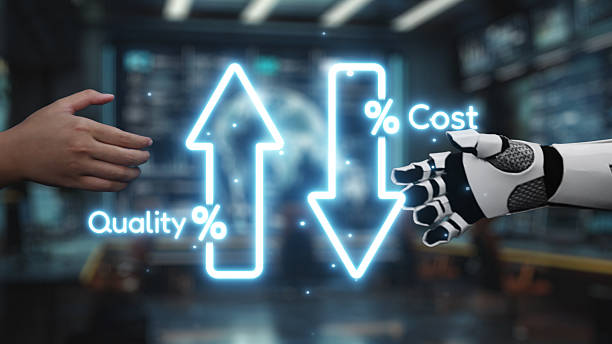
AI can help reduce some operating costs by automating repetitive activities and increasing employee productivity. This doesn’t mean every AI tool will save money. Poorly selected software can actually create another expense.
The smarter approach is to identify a costly or time-consuming process first.
Ask:
- Where are employees spending too much time?
- Which tasks are repetitive?
- Which processes depend heavily on manual data entry?
- Which customer questions are asked repeatedly?
- Which reports take too long to prepare?
- Which marketing activities are difficult to maintain consistently?
- Where are mistakes occurring because employees are overloaded?
Then consider whether AI can improve that specific process.
This is much better than buying ten AI subscriptions simply because they’re popular.
Google, for example, now positions Gemini within Google Workspace as a way for small businesses to streamline work across tools such as Gmail, Docs, Sheets, and Slides. Its small-business guidance highlights uses ranging from administrative assistance to data analysis and workflow automation.
The principle is simple: use AI where it removes friction.
AI-Powered Marketing Can Help Small Businesses Look Bigger
Marketing is another area where small businesses can compete more effectively.
Large companies can afford advertising agencies, graphic designers, copywriters, video teams, SEO specialists, social media managers, and market researchers.
A small business may have one person responsible for all of that.
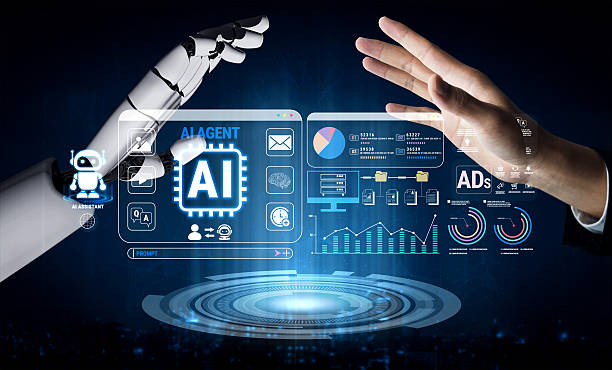
AI can help close part of the capability gap.
It can support:
- Content planning
- Blog writing
- Social media ideas
- Email campaigns
- Customer segmentation
- Market research
- Competitor analysis
- Search-engine optimisation
- Advertisement concepts
- Product descriptions
- Video scripts
- Image concepts
- Customer personas
- Campaign analysis
But there’s a catch.
AI-generated marketing isn’t automatically good marketing.
Customers can spot generic content. They can feel when a brand sounds robotic. They can tell when a company has copied the same predictable AI-generated language everyone else is using.
That’s why human creativity still matters.
The winning formula is not “AI creates everything.”
It’s “AI accelerates the process while humans provide the brand voice.”
A small Ghanaian business, for example, can use AI to generate ten campaign concepts and then select the one that best reflects local customer behaviour, language, culture, and purchasing patterns.
That human context is the competitive advantage.
AI Can Help Small Businesses Understand Customers Better

Large companies have traditionally had an advantage because they possess enormous amounts of customer data.
Small businesses often have useful data too, but it may be scattered across spreadsheets, emails, point-of-sale systems, accounting software, customer relationship management platforms, and social media.
AI can help turn that information into useful questions and insights.
A business owner could ask:
“What products generated the highest revenue this quarter?”
“Which customers haven’t purchased in six months?”
“Which expenses increased most sharply?”
“What complaints appear most frequently?”
“Which products are often purchased together?”
“What factors seem to be affecting our sales?”
The answers still need to be checked. AI can make mistakes, misunderstand context, or produce conclusions that aren’t supported by the data.
Nevertheless, it can shorten the distance between raw information and a useful business conversation.
This is particularly valuable because small-business owners often don’t have a dedicated business intelligence department.
A spreadsheet that previously sat untouched for three months can become a source of regular management insight.
AI Can Improve Customer Service Without Losing the Human Touch
Customers expect fast responses.
That’s difficult for a small team.
A business operating from 8 a.m. to 5 p.m. may still receive questions at 9 p.m. A customer might want to know about pricing, delivery, opening hours, product availability, payment options, or return policies.
AI-powered customer service tools can help handle straightforward questions and route more complex issues to employees.
This creates a useful division of labour.
AI handles the predictable.
People handle the personal.
For instance, a chatbot can answer “What time do you close?” while a human employee handles “I’m disappointed because my previous order arrived late.”
The second situation requires empathy and judgement.
That’s where businesses should be careful. Automation should not become an excuse to make customers fight with a machine.
The best customer-service strategy uses AI to make employees more responsive rather than making the business less human.
AI Can Give Small Businesses Better Financial Intelligence

Financial management is one of the most important areas where AI can create competitive advantage.
Many small businesses have accounting records but don’t use them effectively for decision-making.
The owner may know revenue. They may know expenses. They may know the bank balance.
But do they know why profit changed?
Do they know which customers are most profitable?
Do they know which expenses are growing faster than revenue?
Do they know whether cash flow will become tight next month?
AI can assist finance teams and business owners by helping analyse financial information and identify patterns.
For example, a finance professional can use AI to assist with:
- Variance analysis
- Budget preparation
- Financial trend analysis
- Expense classification
- Management reporting
- Cash-flow analysis
- Ratio interpretation
- Scenario planning
- Forecasting
- Report commentary
However, financial information is sensitive. Businesses should never blindly paste confidential customer or financial information into an AI system without understanding the tool’s privacy, security, data-retention, and access controls.
AI can assist the accountant.
It shouldn’t replace professional judgement.
This is also where professional platforms such as KNOWSIA can contribute to the development of digitally capable professionals. As an e-learning platform, Knowsia can help learners build practical knowledge that combines professional expertise with emerging technology.
For accounting professionals pursuing qualifications such as ICAG, the future is unlikely to be about choosing between accounting knowledge and technology. It will increasingly involve combining both.
AI Can Help Small Businesses Make Faster Decisions
Speed matters.
A large organisation may take weeks to move information through several departments before making a decision.
A small business can sometimes make a decision in an afternoon.
That’s an advantage.
AI can make that advantage even stronger by helping owners and managers analyse information quickly.
Suppose a restaurant notices that one menu item is selling poorly. Instead of simply removing it, management could use AI-assisted analysis to examine sales trends, customer reviews, pricing, ingredient costs, and seasonal patterns.
Perhaps the problem isn’t the product.
Perhaps it’s the price.
Or the description.
Or the location on the menu.
Or the fact that customers don’t understand what it contains.
Better analysis can lead to better decisions.
The objective isn’t to let AI make decisions without supervision. It’s to help decision-makers ask better questions and evaluate more information.
AI Can Help Small Businesses Compete Through Personalization
Large companies often have sophisticated customer segmentation systems.
Small businesses can use AI to create more personalised experiences too.
A company selling professional training courses, for instance, could segment learners according to their interests, experience levels, previous purchases, and learning goals.
One customer might receive information about accounting courses.
Another might receive content about data analytics.
A third might be more interested in entrepreneurship.
Personalisation can make marketing more relevant and reduce the waste associated with sending the same message to everybody.
The important point is that AI should support relevance, not manipulation.
Customers should feel understood rather than watched.
AI Can Accelerate Product and Service Innovation

Small businesses have one major advantage over many large corporations: agility.
They can test ideas quickly.
AI can make experimentation even faster.
A business owner can brainstorm twenty product concepts, compare possible customer segments, analyse competitors, develop a prototype message, prepare a landing page draft, and create a customer survey in a fraction of the time it might have taken manually.
That doesn’t mean every idea will work.
In fact, many won’t.
But AI can make experimentation cheaper.
And when experimentation becomes cheaper, innovation becomes more accessible.
A small company doesn’t need to spend months developing an idea before learning whether customers care about it.
It can test, learn, adjust, and test again.
That’s a powerful competitive loop.
AI Can Help Small Businesses Recruit and Develop Talent
Hiring is another area where small businesses often struggle.
Large companies can have recruitment specialists and dedicated learning departments.
Small businesses may not.
AI can assist with job descriptions, interview-question development, candidate communication, onboarding materials, training plans, and employee development.
But businesses must be careful.
Recruitment decisions can carry significant risks if AI systems introduce bias or are used without appropriate oversight.
AI should support structured hiring processes rather than become an invisible decision-maker.
The same technology can also help existing employees develop their skills.
Employees can use AI as a learning assistant to explain difficult concepts, create practice exercises, simulate scenarios, or provide feedback on drafts.
That creates an opportunity for continuous learning without requiring a large corporate training budget.
AI Skills Employers Are Looking for in Young Professionals Can Become a Business Asset

The phrase “AI skills” can sound vague.
In practice, several capabilities matter.
AI Literacy
Employees should understand what AI can and cannot do.
They should know that generative AI can produce convincing but incorrect information.
They should understand the importance of verification.
Prompting and AI Communication
Professionals need to know how to give clear instructions to AI systems.
Good prompting isn’t about finding magical words.
It’s about providing context, defining the desired outcome, setting constraints, and reviewing the result.
Data Literacy
AI becomes more useful when employees understand data.
They should know how to interpret spreadsheets, identify trends, question unusual results, and distinguish correlation from causation.
Critical Thinking
This may be one of the most important skills of all.
AI can produce an answer quickly.
The professional must determine whether that answer makes sense.
Problem-Solving
The real value of AI comes from applying it to business problems.
Employees who can identify bottlenecks and design better workflows can create more value than employees who simply know how to generate text.
Communication
AI can draft an email.
It can’t take responsibility for the relationship.
Human communication remains essential.
These capabilities explain why AI Skills Employers Are Looking for in Young Professionals should be viewed as complementary to professional expertise rather than separate from it.
Small Businesses Should Start with Problems, Not Technology

One of the biggest mistakes businesses make is beginning with the question:
“Which AI tool should we buy?”
The better question is:
“What problem are we trying to solve?”
That small change in thinking can save a lot of money.
Suppose customer-service response times are too slow.
Start there.
Suppose management reports take five days to prepare.
Start there.
Suppose the sales team spends too much time entering information manually.
Start there.
Suppose marketing content is inconsistent.
Start there.
Once the problem is identified, explore whether AI is an appropriate solution.
Sometimes it won’t be.
That’s perfectly fine.
Not every business problem needs AI.
A Practical AI Adoption Framework for Small Businesses
Small businesses can approach AI adoption through a simple process.
1. Audit Repetitive Work
List the activities employees perform repeatedly.
Look for tasks involving copying, summarising, sorting, drafting, classifying, searching, and reporting.
2. Identify High-Value Opportunities
Don’t automate everything.
Choose tasks where time savings or quality improvements would have a meaningful business impact.
3. Start Small
Choose one workflow.
Run a pilot.
Measure the results.
Then expand.
4. Train Employees
Employees need more than access to AI tools.
They need to understand how to use them responsibly.
5. Create Human Review
AI-generated information should be checked according to the risk of the task.
A social media draft may require a quick review.
A financial report requires much greater scrutiny.
6. Protect Sensitive Information
Establish rules about what employees can and cannot enter into AI systems.
Customer information, passwords, confidential contracts, financial records, intellectual property, and other sensitive data require appropriate safeguards.
7. Measure Results
Track whether AI is actually helping.
Useful measures include:
- Hours saved
- Cost reduction
- Response time
- Error rates
- Customer satisfaction
- Revenue
- Conversion rates
- Employee productivity
If the numbers don’t improve, rethink the workflow.
Common Mistakes Small Businesses Should Avoid
AI can create enormous opportunities, but enthusiasm needs to be balanced with caution.
Buying Too Many Tools
A business can easily accumulate AI subscriptions that nobody uses.
Start with a small toolkit.
Automating Broken Processes
If a process is inefficient, automating it may simply make the inefficiency faster.
Fix the process first.
Trusting AI Without Verification
AI can hallucinate facts, invent sources, misinterpret data, and make confident mistakes.
Human review is essential.
Ignoring Cybersecurity
AI adoption creates new security considerations. The OECD’s 2026 SME research identifies cybersecurity as an important digitalisation challenge and notes that many SMEs experience cyberattacks.
Businesses should therefore think about access controls, passwords, employee permissions, vendor security, data handling, and internal policies.
Forgetting Employees
People may resist AI because they fear job losses or don’t understand how the technology affects their work.
Explain the purpose.
Show the benefits.
Train people.
Invite employees into the process.
Chasing Trends
Not every new AI model, agent, or application deserves immediate adoption.
A boring tool that saves ten hours a week is more valuable than an exciting tool nobody uses.
AI Doesn’t Mean Small Businesses Must Become Less Human

This point deserves emphasis.
Competition isn’t simply about who can automate the most.
Customers still value trust.
They value responsiveness.
They value relationships.
They value expertise.
They value businesses that understand their problems.
AI can help a small business provide those things more consistently, but it can’t manufacture genuine trust on its own.
A local accountant who understands a client’s business may be more valuable than a large automated platform that doesn’t.
A small retailer that remembers its customers may outperform a multinational with better technology but worse service.
A training provider that understands learners’ struggles can build stronger relationships than a huge platform that simply produces endless automated content.
AI should strengthen those human advantages.
The Competitive Advantage of the AI-Ready Small Business

The real competitive advantage won’t necessarily belong to the company with the most AI tools.
It will belong to the company that integrates AI into its business better.
That’s a crucial distinction.
Two companies may have access to exactly the same AI model.
One uses it to generate generic social media posts.
The other uses it to analyse customer feedback, improve its content strategy, identify sales opportunities, automate administrative work, and train employees.
Same technology.
Different outcome.
The difference is capability.
That’s why AI literacy, critical thinking, data skills, communication, adaptability, and problem-solving matter so much.
Technology is increasingly becoming accessible.
The ability to use it intelligently is becoming the differentiator.
What Small Businesses Can Do Today

A small business doesn’t need a huge transformation project to get started.
This week, management can choose one repetitive task and test whether AI can improve it.
For example:
- Identify a task that consumes several hours each week.
- Document the current process.
- Select an appropriate AI-enabled tool.
- Test the tool on low-risk information.
- Compare the result with the existing process.
- Check accuracy and quality.
- Measure the time saved.
- Ask employees whether the new process actually helps.
- Improve the workflow.
- Decide whether to scale it.
That’s it.
No giant technology programme.
No complicated jargon.
Just one useful experiment.
Once that experiment works, another can follow.
Over time, these small improvements can compound.
The Future Belongs to Businesses That Learn Faster

Large companies will continue to have advantages.
They’ll have larger budgets, more data, deeper talent pools, stronger distribution networks, and greater access to capital.
Small businesses aren’t going to erase those advantages.
But they don’t have to.
Their opportunity is different.
They can move quickly.
They can make decisions faster.
They can understand customers personally.
They can experiment without navigating layers of bureaucracy.
And with AI, they can increasingly access capabilities that once belonged primarily to much larger organisations.
The OECD notes that digitalisation can help SMEs access new markets, improve efficiency, enhance business intelligence, automate processes, and compete more evenly with larger companies.
That is the opportunity.
AI isn’t a magic wand.
It’s leverage.
The businesses that understand that distinction will be better positioned to use artificial intelligence responsibly and profitably.
Conclusion: AI Can Help Small Businesses Punch Above Their Weight

Small businesses don’t need to become technology companies to benefit from artificial intelligence.
They need to become better businesses.
AI can help them reduce administrative workloads, improve marketing, understand customers, analyse finances, strengthen customer service, accelerate innovation, support employees, and make faster decisions.
The most important step is not buying the newest AI application. It’s identifying where the business is losing time, money, information, or opportunities and determining whether AI can address that gap.
For young professionals, this creates an equally important opportunity. Developing AI Skills Employers Are Looking for in Young Professionals isn’t simply about becoming better at using chatbots. It’s about learning how to combine artificial intelligence with critical thinking, professional knowledge, data literacy, communication, creativity, and sound judgement.
That combination can become extremely valuable inside a small business.
And for entrepreneurs, the message is straightforward: you may not have the workforce of a multinational corporation, but with the right people, processes, skills, and AI tools, you can accomplish far more than your headcount suggests.
The playing field isn’t perfectly level.
But AI is helping make it more level than it used to be.