
Leading Effectively in the Age of Artificial Intelligence
Artificial intelligence is changing how people work, make decisions, communicate, and build careers. For young professionals, this makes technical competence only one part of the equation. The broader skills discussed in Essential Skills Every Young Professional Needs—including communication, adaptability, critical thinking, problem-solving, leadership, and continuous learning—become even more valuable when combined with technology. This article focuses specifically on AI Skills Employers Are Looking for in Young Professionals and explains how emerging professionals can develop the leadership mindset needed to work effectively with AI, guide others through technological change, make responsible decisions, and create value rather than simply follow technological trends.
Understanding AI Leadership and the AI Skills Employers Are Looking for in Young Professionals

AI leadership isn’t simply about knowing how to use ChatGPT, generate images, automate spreadsheets, or write a clever prompt. It’s about understanding how artificial intelligence can change the way work is performed and then helping people use that technology intelligently.
A young professional doesn’t need to become a machine-learning engineer to demonstrate AI leadership. What matters is the ability to recognize opportunities, ask better questions, evaluate AI-generated information, understand risks, communicate clearly, and connect technology with meaningful business outcomes.
This distinction is becoming increasingly important.
The World Economic Forum’s Future of Jobs Report 2025 identifies AI and big data among the fastest-growing skills, while technological literacy, creative thinking, resilience, flexibility, curiosity, lifelong learning, leadership, social influence, and analytical thinking are also rising in importance. (World Economic Forum)
In other words, employers aren’t looking for professionals who can merely operate technology. They’re looking for people who can think with technology without surrendering their judgment to it.
That is the heart of AI leadership.
A young accountant, marketer, auditor, analyst, project manager, teacher, administrator, entrepreneur, or finance professional can demonstrate AI leadership by asking:
- Where can AI reduce repetitive work?
- Which decisions still require human judgment?
- How can AI improve customer or employee experiences?
- What information should never be entered into an AI system?
- How do we verify an AI-generated answer?
- What new opportunities could this technology create?
- How can the team learn to use AI responsibly?
These questions move a professional from simply being an AI user to becoming an AI-enabled problem solver.
Why AI Skills Employers Are Looking for in Young Professionals Matter
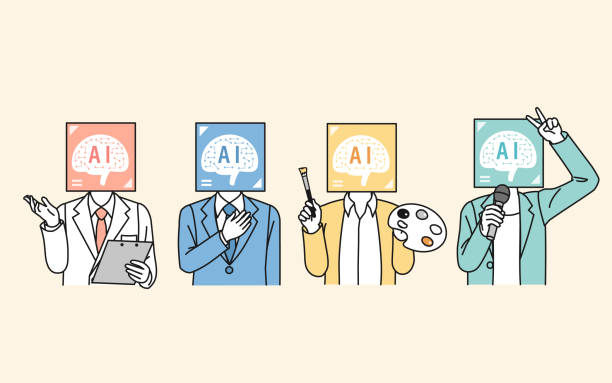
The workplace is moving from a model where technology supports people to one where people increasingly collaborate with intelligent systems.
Microsoft’s 2025 Work Trend Index described the emergence of organizations built around human-agent collaboration and reported that 82% of leaders surveyed considered the period a pivotal year for rethinking strategy and operations. (The Official Microsoft Blog)
That shift has major implications for young professionals.
Imagine two employees performing the same job.
Employee A waits for instructions, performs routine tasks manually, and uses AI occasionally when someone tells them to.
Employee B understands the same job deeply, identifies repetitive processes, experiments with AI tools, verifies outputs, improves workflows, documents what works, and helps colleagues adopt better methods.
Both employees may have similar academic qualifications.
But Employee B is beginning to demonstrate AI leadership.
This is why the AI Skills Employers Are Looking for in Young Professionals extend beyond software familiarity. Employers increasingly need people who can combine technical awareness with business judgment, communication, creativity, ethics, and adaptability.
AI is becoming part of the professional toolkit. The competitive advantage comes from knowing how—and when—to use it.
The First AI Skill: AI Literacy
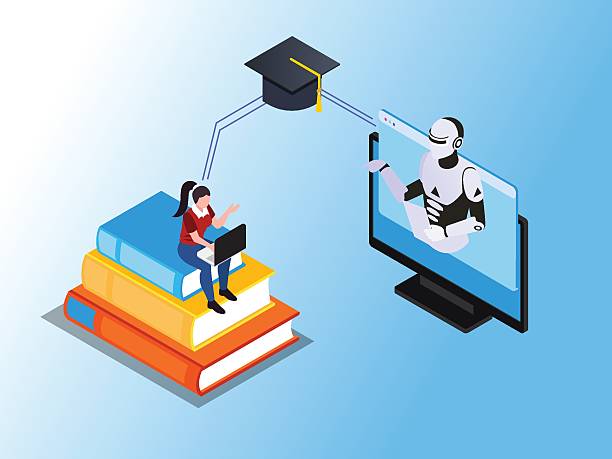
AI literacy is the foundation on which other AI leadership capabilities are built.
You don’t need to understand every mathematical principle behind a large language model. However, you should understand the basic concepts behind generative AI, machine learning, automation, data, prompts, AI agents, hallucinations, bias, privacy, and model limitations.
AI literacy means knowing what AI can do, what it cannot do, and where its output should be questioned.
For example, a young finance professional might ask an AI tool to analyze financial statements. That’s useful. But AI literacy means knowing that the analysis still needs to be checked against the underlying figures, accounting standards, organizational policies, and professional judgment.
Similarly, a marketing professional may use AI to generate campaign ideas. AI literacy means understanding that generated ideas must still be tested against the brand, audience, cultural context, legal requirements, and actual customer behavior.
LinkedIn reported in 2025 that AI literacy had become one of the most in-demand skills employers were seeking across jobs, while its research also found that leaders were increasingly adding AI-related skills to their professional profiles. (LinkedIn Pressroom)
That’s a strong signal: AI literacy is moving from a nice-to-have capability toward a core professional skill.
Critical Thinking: The Human Advantage

One of the biggest mistakes professionals can make is assuming that an AI-generated answer must be correct because it sounds convincing.
It isn’t.
AI systems can produce inaccurate, incomplete, outdated, biased, or fabricated information. A polished response can still be wrong.
That’s why critical thinking is one of the most important AI Skills Employers Are Looking for in Young Professionals.
A strong AI-enabled professional doesn’t simply ask, “What did the AI say?”
They ask:
“How do we know this is correct?”
That difference matters.
Critical thinking involves checking sources, challenging assumptions, comparing alternatives, identifying inconsistencies, understanding context, and recognizing when additional evidence is required.
Consider an auditor using AI to identify unusual transactions. The system may flag patterns that deserve attention, but the auditor must determine whether those transactions actually represent risks, errors, fraud indicators, legitimate business activity, or unusual but explainable circumstances.
The AI can accelerate the investigation.
The professional remains responsible for the judgment.
This human-machine relationship will become increasingly important as AI becomes more capable.
Prompt Engineering as a Practical Professional Skill

Prompt engineering has become one of the most discussed AI skills, but it should be approached practically rather than as a buzzword.
A good prompt gives an AI system sufficient context to produce a useful response.
Young professionals should learn how to communicate:
- The objective
- The relevant background
- The desired output
- The audience
- The constraints
- The format
- Examples where appropriate
- Quality criteria
For example, instead of asking:
“Analyze this report.”
A stronger prompt might explain the role the AI should assume, identify the purpose of the analysis, specify the audience, provide the decision that needs to be supported, and request a structured output.
Good prompting is essentially structured communication.
That makes it valuable beyond AI tools. A professional who can clearly define a problem is often better positioned to solve it—whether the solution comes from AI, Excel, Power BI, a colleague, or conventional research.
However, prompting shouldn’t become the entire definition of AI competence. The real goal is not to write fancy prompts. The goal is to get better work done.
Data Literacy and AI Decision-Making

AI runs on data, and professionals who understand data will have a significant advantage.
Data literacy means being able to interpret information, identify relevant metrics, recognize poor-quality data, understand basic statistical concepts, and draw reasonable conclusions from evidence.
This becomes especially important because AI can amplify problems that already exist in data.
Garbage in, garbage out remains a useful principle—even when the garbage is processed by sophisticated technology.
A young professional should therefore learn how data is collected, cleaned, structured, analyzed, interpreted, and protected.
For example, a finance professional using AI to forecast revenue needs to understand the assumptions behind the forecast. A human resources professional using analytics needs to understand whether the underlying workforce data is representative. A marketer using customer data needs to consider privacy, consent, segmentation, and bias.
Data literacy transforms AI from a mysterious black box into a tool that can be evaluated intelligently.
Communication Is Still a Leadership Superpower

Technology hasn’t eliminated the need for communication. If anything, it has made communication more important.
A young professional might build an impressive AI workflow, but if nobody understands it, adopts it, or trusts it, the workflow may never create meaningful value.
AI leadership therefore requires the ability to explain complex ideas simply.
You may need to tell a manager:
“This automation can reduce the time spent preparing the monthly report, but the final numbers still need human review.”
Or tell a colleague:
“The AI generated this recommendation, but I’ve verified the underlying figures before using it.”
Or tell senior management:
“We shouldn’t automate this process yet because the data quality isn’t reliable enough.”
These conversations require confidence, clarity, diplomacy, and judgment.
The best AI leaders don’t make technology sound complicated. They make its value understandable.
Adaptability: Learning Faster Than Technology Changes
AI tools are changing quickly.
A tool that dominates today’s conversations may be replaced, upgraded, integrated into another platform, or made irrelevant within a surprisingly short period.
Consequently, young professionals shouldn’t build their careers around mastering one particular AI application.
Instead, they should develop learning agility.
Learn the underlying concepts.
Understand workflows.
Experiment regularly.
Follow credible developments.
Build projects.
Reflect on failures.
Then learn again.
This mindset aligns closely with the growing importance of curiosity and lifelong learning identified in the World Economic Forum’s 2025 skills outlook. (World Economic Forum)
The question isn’t:
“Do I know the latest AI tool?”
A better question is:
“Can I quickly learn and responsibly apply new technology when my work requires it?”
That’s a much more durable career advantage.
AI Leadership Requires Ethical Judgment
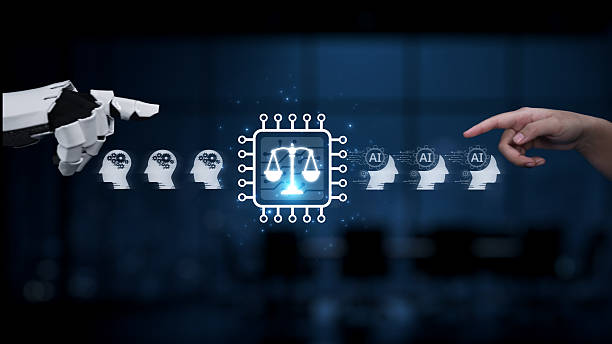
AI creates opportunities, but it also creates risks.
A professional who understands how to use AI but ignores ethics can create serious problems for an organization.
Consider privacy.
Should confidential customer information be copied into an AI platform?
Consider bias.
Could an automated recruitment system unintentionally disadvantage a particular group?
Consider accountability.
Who is responsible when an AI-supported decision causes harm?
Consider intellectual property.
Does the organization have permission to use particular data or content?
Consider transparency.
Should employees or customers be told when AI is being used?
These aren’t theoretical questions.
The National Institute of Standards and Technology’s AI Risk Management Framework emphasizes characteristics such as validity and reliability, safety, security and resilience, accountability and transparency, explainability and interpretability, privacy enhancement, and fairness with harmful bias managed. (NIST)
Young professionals don’t need to become AI policy specialists overnight. But they should develop the habit of asking whether an AI application is appropriate, safe, fair, transparent, and aligned with organizational values.
That is leadership.
Responsible AI: Knowing When Not to Use AI
Sometimes the smartest AI decision is not to use AI.
That’s an uncomfortable idea in an era where organizations are under pressure to “AI-enable” everything.
But technology should solve problems—not create impressive-looking demonstrations.
Suppose a process takes five minutes manually and requires highly sensitive information. Automating it with an AI system might introduce unnecessary privacy and security risks.
Or suppose a decision involves a vulnerable individual and requires empathy, contextual understanding, and accountability. Full automation may be inappropriate.
AI leadership means understanding these boundaries.
A useful framework is simple:
Use AI where it creates meaningful value, avoid it where the risks outweigh the benefits, and keep humans involved where judgment and accountability matter.
The NIST AI Risk Management Framework provides a structured approach for organizations seeking to manage AI risks across design, development, deployment, use, testing, and evaluation. (NIST)
Young professionals who develop this mindset will be better prepared to contribute to responsible AI adoption.
Problem-Solving in the Age of Artificial Intelligence

AI doesn’t remove the need to solve problems.
It changes the way problems can be approached.
A traditional problem-solving process might involve identifying a problem, researching possible solutions, evaluating alternatives, implementing a solution, and monitoring results.
AI can accelerate several of those stages.
It can summarize information, generate alternatives, analyze patterns, simulate scenarios, identify anomalies, draft documentation, and support research.
But the professional must still define the problem correctly.
This is crucial because solving the wrong problem faster doesn’t create value.
A young accountant might automate a monthly reconciliation process. Before doing so, however, they should ask why the reconciliation takes so long in the first place.
Perhaps the problem isn’t the reconciliation.
Perhaps the underlying transaction process is poorly designed.
AI can help fix the symptom.
Leadership asks whether the root cause should be fixed instead.
AI and Emotional Intelligence

Here’s something that technology can’t simply automate away: relationships.
Leadership is fundamentally human.
Employees can become anxious when AI is introduced. Some may fear losing their jobs. Others may feel embarrassed because they don’t understand the technology. Some may resist because previous technology projects failed.
A technically brilliant implementation can collapse if these human realities are ignored.
Emotional intelligence helps young professionals recognize how people respond to change.
That means listening.
It means explaining rather than intimidating.
It means acknowledging uncertainty.
It means helping colleagues learn.
It means celebrating small wins.
A young professional who can combine AI competence with empathy can become a powerful change agent within an organization.
AI Leadership Means Leading From Any Position
You don’t need a managerial title to demonstrate leadership.
A junior employee can identify a repetitive task and propose an automation solution.
An analyst can create a dashboard that improves decision-making.
An accountant can develop an AI-assisted reporting workflow.
A teacher can experiment with responsible AI-assisted learning.
A marketing executive can improve research and content workflows.
An administrator can automate document-heavy processes.
None of these professionals needs to be a CEO.
Leadership begins when someone takes responsibility for improving outcomes.
This is especially relevant for young professionals because formal authority often comes later in a career. Influence, however, can begin immediately.
If you can identify a problem, propose a sensible solution, demonstrate its value, communicate the risks, and help others adopt it, you’re already practicing leadership.
Building the AI Skills Employers Are Looking for in Young Professionals

Developing the AI Skills Employers Are Looking for in Young Professionals doesn’t require trying to learn everything simultaneously.
Instead, build your capability in layers.
Layer 1: Understand AI
Learn the fundamentals of generative AI, machine learning, automation, AI agents, data, and common AI limitations.
Layer 2: Use AI
Choose tools relevant to your profession and use them regularly.
For an accountant, that might include AI-assisted analysis, Excel automation, research, reporting, and data interpretation.
For a marketer, it might include customer research, content ideation, campaign analysis, and personalization.
For a project manager, it could involve planning, documentation, risk analysis, and meeting summaries.
Layer 3: Verify AI
Don’t blindly accept outputs.
Check facts.
Validate numbers.
Review assumptions.
Compare sources.
Protect confidential information.
Layer 4: Integrate AI
Move beyond isolated experiments.
Connect AI with existing workflows, systems, spreadsheets, dashboards, communication channels, and business processes.
Layer 5: Lead AI Adoption
Teach colleagues.
Document successful workflows.
Identify risks.
Measure results.
Recommend improvements.
This final stage is where technical skill begins to become leadership capability.
AI Skills Employers Are Looking for in Young Professionals: Practical Examples
The best way to understand these skills is to see how they appear in everyday work.
Example 1: Accounting
A young accountant uses AI to draft a variance analysis.
Instead of copying the output directly into a report, they verify the numbers, investigate unusual movements, compare explanations with source documents, and refine the narrative.
The AI saves time.
The accountant supplies judgment.
Example 2: Human Resources
An HR professional uses AI to draft job descriptions.
They then review the language for inclusivity, accuracy, organizational fit, and unintended bias.
The AI assists with drafting.
The professional remains accountable for the final content.
Example 3: Marketing
A marketing executive uses AI to generate ten campaign concepts.
Rather than choosing the most entertaining idea, they evaluate each concept against customer insights, brand positioning, budget, business objectives, and expected return.
AI expands the option set.
Human judgment selects the direction.
Example 4: Education
An educator uses AI to create practice questions.
They review the questions for accuracy, relevance, difficulty, and alignment with the curriculum before giving them to learners.
Again, AI accelerates production without replacing professional responsibility.
These examples demonstrate a recurring pattern: AI performs useful work, while the professional remains accountable for the outcome.
How Young Professionals Can Build an AI Portfolio

Saying “I’m good at AI” isn’t nearly as persuasive as demonstrating what you’ve built.
That’s why young professionals should consider creating an AI portfolio.
Your portfolio might include:
- An automated Excel reporting workflow
- An AI-assisted research process
- A Power BI dashboard
- A customer-service workflow
- A financial analysis project
- A document automation system
- A prompt library
- An AI governance checklist
- A process improvement case study
- A before-and-after productivity comparison
For each project, explain four things:
The problem: What wasn’t working?
The AI solution: What did you introduce?
The human contribution: What decisions still required professional judgment?
The result: What improved?
This turns an abstract claim about AI competence into evidence.
For learners and professionals using an e-learning platform such as KNOWSIA, project-based learning can be particularly useful because it connects knowledge acquisition with practical application.

The same principle applies to professional development in fields such as accounting and finance, including preparation for professional qualifications associated with organizations such as ICAG.
The goal isn’t to collect certificates endlessly.
The goal is to become demonstrably capable.
AI Leadership and Continuous Professional Development

AI leadership shouldn’t be treated as a one-time course.
Technology evolves too quickly.
A professional development strategy should therefore combine formal learning with experimentation.
You might dedicate one hour each week to learning a new AI capability.
You could spend another hour applying it to a real professional problem.
Then document what happened.
What worked?
What failed?
What surprised you?
What risks did you identify?
What would you do differently?
After several months, these small experiments can become a powerful body of practical knowledge.
This approach is more valuable than simply consuming endless AI news.
Knowledge becomes capability when it is applied.
The Difference Between AI Users and AI Leaders
There is a subtle but important distinction between using AI and leading with AI.
An AI user asks:
“How can AI help me finish this task?”
An AI leader asks:
“How should this task be redesigned now that AI is available?”
An AI user automates an activity.
An AI leader examines the entire workflow.
An AI user focuses on speed.
An AI leader considers speed, quality, risk, people, cost, and long-term impact.
An AI user experiments alone.
An AI leader helps others adopt effective practices.
An AI user asks what technology can do.
An AI leader asks what should be done.
That final question is perhaps the most important.
Technology expands our options.
Leadership determines which options are worth pursuing.
Preparing for Human-Agent Collaboration

The workplace is moving toward greater collaboration between humans and AI systems, including AI agents capable of performing increasingly complex sequences of tasks.
Microsoft’s 2025 Work Trend Index highlighted the development of human-agent teams and argued that organizations will increasingly need to rethink how work is structured around these capabilities. (Source)
This doesn’t mean every professional needs to become an AI developer.
It means professionals should become comfortable managing digital collaborators.
That may involve:
- Defining tasks clearly
- Setting objectives
- Giving AI appropriate context
- Reviewing outputs
- Monitoring performance
- Escalating unusual situations
- Establishing quality standards
- Protecting sensitive information
- Improving workflows
In effect, professionals may increasingly become managers of both human and digital work.
That’s a profound change.
And young professionals who develop these capabilities early could have an enormous advantage.
Why Human Skills Still Matter
It’s tempting to assume that AI will make technical skills everything.
The opposite may be closer to reality.
As AI handles more routine cognitive tasks, uniquely human capabilities can become more valuable.
Creativity matters because someone must decide what should be created.
Empathy matters because relationships still require trust.
Communication matters because teams still need alignment.
Leadership matters because organizations still need direction.
Ethical judgment matters because technology creates consequences.
Curiosity matters because nobody knows exactly how work will evolve.
Resilience matters because change rarely arrives neatly.
The World Economic Forum’s skills research reinforces this combination of technological and human capabilities, highlighting not only AI and big data but also creative thinking, resilience, flexibility, agility, curiosity, lifelong learning, leadership, and analytical thinking. (World Economic Forum)
So, ironically, becoming more technologically capable can make your human capabilities even more important.
Common Mistakes Young Professionals Should Avoid

AI leadership can go wrong when professionals make a few predictable mistakes.
Using AI Without Verification
Never assume fluent output equals accurate output.
Sharing Confidential Information
Don’t paste sensitive company, customer, employee, financial, or proprietary information into an AI tool without understanding the applicable policies and safeguards.
Chasing Every New Tool
You don’t need 50 AI applications.
Master a small number that genuinely improve your work.
Automating Bad Processes
Don’t automate a broken workflow simply because you can.
Fix the process first.
Treating AI as a Replacement for Thinking
AI should increase your thinking capacity, not switch your brain off.
Ignoring Colleagues
Successful adoption requires people.
Help others understand why the technology matters and how they can use it.
Measuring Activity Instead of Impact
Using AI for three hours doesn’t automatically mean you’ve become more productive.
Measure outcomes.
Did quality improve?
Did turnaround time fall?
Did costs decrease?
Did customer satisfaction improve?
Did employees gain capacity for higher-value work?
Those are the numbers that matter.
A Practical AI Leadership Roadmap for Young Professionals
If you’re wondering where to start, keep it simple.
Month 1: Build AI literacy.
Understand the fundamentals. Learn what generative AI can do, where it fails, and how to use it responsibly.
Month 2: Apply AI to your current job.
Identify three repetitive tasks. Experiment with AI-assisted approaches.
Month 3: Develop data and verification skills.
Learn how to evaluate AI outputs and work confidently with data.
Month 4: Build one serious project.
Create an AI-assisted workflow that solves a real professional problem.
Month 5: Measure the impact.
Track time saved, quality improvements, errors reduced, or other meaningful outcomes.
Month 6: Teach someone else.
Share the workflow with a colleague or team.
Teaching forces you to understand the process deeply.
By the end of six months, you won’t merely have consumed information about AI. You’ll have evidence that you can apply it.
That’s the difference between learning and capability.
AI Leadership: The Career Advantage of the Next Generation
The future won’t belong exclusively to people who know the most about artificial intelligence.
It will increasingly favor professionals who know how to combine AI with sound judgment.
That’s why the AI Skills Employers Are Looking for in Young Professionals should be viewed as a broader professional capability rather than a checklist of software tools.
AI literacy gives you understanding.
Prompting gives you control.
Data literacy gives you analytical confidence.
Critical thinking gives you discernment.
Communication gives you influence.
Adaptability gives you resilience.
Ethics gives you responsibility.
Leadership gives all of these skills direction.
For young professionals, this combination can become a powerful career differentiator.
The opportunity is especially significant for professionals in emerging markets, where organizations are looking for practical ways to improve productivity, develop talent, reduce costs, and compete in increasingly digital economies. The winners won’t necessarily be those with the biggest technology budgets. They may be the organizations and professionals who learn fastest and apply technology most intelligently.
Final Thoughts
AI leadership isn’t about predicting exactly what artificial intelligence will become.
Nobody can do that with certainty.
It’s about preparing yourself to lead effectively as technology continues to change.
The AI Skills Employers Are Looking for in Young Professionals are therefore much broader than technical knowledge. Employers need people who can understand AI, communicate about it, evaluate its outputs, solve problems with it, manage its risks, learn continuously, and help others adapt.
Most importantly, they need professionals who know that AI is a tool—not a substitute for responsibility.
A young professional who develops this mindset can become more than a user of technology. They can become a builder, problem solver, collaborator, innovator, and trusted leader.
The question isn’t whether AI will change your profession.
It already is.
The better question is whether you’ll simply react to that change—or learn how to lead through it.