
Financial reporting is no longer just about collecting figures, checking spreadsheets, and preparing statements at the end of the month. Today, accountants are expected to analyze information faster, explain what the numbers mean, identify risks, and support better business decisions. That’s where AI Skills Employers Are Looking for in Young Professionals become increasingly important. For accountants, learning how to use artificial intelligence alongside accounting knowledge can improve the speed, quality, and depth of financial reporting while creating more time for professional judgement and strategic analysis. For professionals developing their careers through platforms such as knowsia an e-learning platform, this shift presents a practical opportunity: AI doesn’t replace accounting expertise; it makes that expertise more valuable.
AI Skills Employers Are Looking for in Young Professionals in Financial Reporting

The demand for professionals who can combine technical expertise with technology is growing. Employers aren’t simply looking for accountants who know how to prepare an income statement or reconcile a bank account. They increasingly want professionals who can work confidently with data, automation, analytics, and AI while still understanding accounting principles and internal controls.
The International Federation of Accountants (IFAC) has highlighted how AI and intelligent automation can help professional accountants simplify repetitive processes and spend more time on higher-value activities such as analysis, decision-making, and advisory work.
This is an important distinction. AI isn’t accounting knowledge. It isn’t IFRS. It isn’t professional judgement. Instead, it is a technology that can help accountants apply those capabilities more efficiently.
For example, an accountant may use AI to:
- Analyse thousands of transactions for unusual patterns.
- Identify significant month-on-month variances.
- Summarise lengthy financial documents.
- Draft management commentary.
- Assist with reconciliations.
- Classify transactions.
- Extract information from invoices and supporting documents.
- Generate preliminary financial analysis.
- Identify potential reporting anomalies.
- Create questions for management based on unusual movements.
- Support financial forecasting and scenario analysis.
The accountant remains responsible for determining whether the output is reasonable, complete, accurate, and appropriate.
That human responsibility is crucial because financial reporting isn’t merely a data-processing exercise. It involves judgement, evidence, standards, ethics, materiality, controls, and an understanding of the business.
AI Skills Employers Are Looking for in Young Professionals: What Accountants Need to Learn

1. AI-assisted data analysis
Accountants work with enormous amounts of data. AI can help identify relationships, trends, exceptions, and unusual transactions that would take considerably longer to find manually.
Suppose a company has 50,000 expense transactions. Rather than reviewing every line individually, an AI-enabled analytical system could help flag transactions that differ significantly from historical patterns.
The accountant can then investigate those exceptions.
This creates a powerful division of labour: technology handles large-scale pattern recognition while the accountant provides context and judgement.
2. Prompting and communicating with AI
A surprisingly important skill is knowing how to ask AI the right questions.
A weak prompt might say:
“Analyse this financial report.”
A stronger approach would specify the objective, audience, period, accounting context, and desired output.
For example:
“Analyse the attached monthly management accounts and identify the five largest unfavourable expense variances compared with budget. For each variance, provide the percentage movement, possible explanations to investigate, and three questions management should answer before the report is finalised.”
The second instruction gives the system a much clearer task.
Accountants therefore need to develop AI literacy and prompt-writing skills—not because every accountant needs to become a software engineer, but because better instructions generally produce more useful outputs.
3. Data literacy
AI is only as reliable as the data and processes surrounding it.
If the underlying ledger contains duplicate transactions, incorrect account mappings, missing records, or inconsistent classifications, an impressive-looking AI analysis can still be wrong.
Accountants therefore need to understand:
- Data quality.
- Data structures.
- Data cleaning.
- Data validation.
- Data governance.
- Data privacy.
- Data lineage.
- Basic analytics.
- Spreadsheet automation.
- Business intelligence.
This is where tools such as Excel, Power Query, Power BI, ERP systems, and AI can work together.
4. Critical thinking and professional scepticism
AI can generate convincing answers that aren’t necessarily correct.
An accountant who accepts every AI-generated explanation without verification creates a new reporting risk.
Professional scepticism remains essential.
The accountant should ask:
- Where did this conclusion come from?
- Is the underlying data complete?
- Can the result be independently verified?
- Does the conclusion agree with the accounting records?
- Is the explanation consistent with business reality?
- Could there be another interpretation?
- Does the output comply with applicable accounting standards?
AI should accelerate thinking—not eliminate it.
How Accountants Can Use AI to Improve Financial Reporting

Automated reconciliations
Bank and ledger reconciliations can consume substantial amounts of accounting time, particularly where transaction volumes are high.
AI-powered systems can help match transactions, identify exceptions, group similar items, and highlight records requiring human investigation.
For example, instead of manually searching through thousands of bank transactions, an accountant can review a smaller exception list generated by the system.
This doesn’t mean reconciliation becomes completely automatic. Rather, the accountant moves from checking everything manually to reviewing exceptions intelligently.
Microsoft’s own finance organisation describes using AI for processes including reconciliation and variance analysis, illustrating how AI can be embedded directly into finance workflows.
Faster variance analysis
Variance analysis is one of the most useful applications of AI in management reporting.
Traditionally, an accountant might compare actual results against budget, calculate percentage differences, and manually investigate significant movements.
AI can accelerate the first part of that process.
It can identify:
- Significant revenue movements.
- Unexpected expense increases.
- Margin changes.
- Changes in working capital.
- Unusual departmental spending.
- Budget overruns.
- Changes in customer behaviour.
- Recurring reporting anomalies.
The accountant can then focus on asking the more important question: Why did this happen?
That shift matters.
A report that simply says expenses increased by 18% isn’t particularly useful. A stronger report might identify that transport expenses increased by 18%, explain the largest contributing cost centres, compare the movement with previous months, and recommend specific areas for management investigation.
AI can help prepare the groundwork. The accountant adds the judgement.
Automated management commentary
Financial statements contain numbers, but management often needs a story behind those numbers.
Why did revenue increase?
Why did gross margin decline?
Why did receivables rise?
Why is cash flow weaker despite higher profits?
AI can help draft initial management commentary based on approved financial data.
For instance:
“Revenue increased by 12% compared with the prior period, primarily driven by higher sales in the wholesale segment. However, gross margin declined by 2.4 percentage points, indicating that the increase in revenue was accompanied by higher direct costs.”
An accountant can then verify the statement, add business context, remove unsupported assumptions, and approve the final version.
The important word is draft.
AI-generated commentary should not automatically become published financial reporting.
AI-Powered Financial Statement Analysis
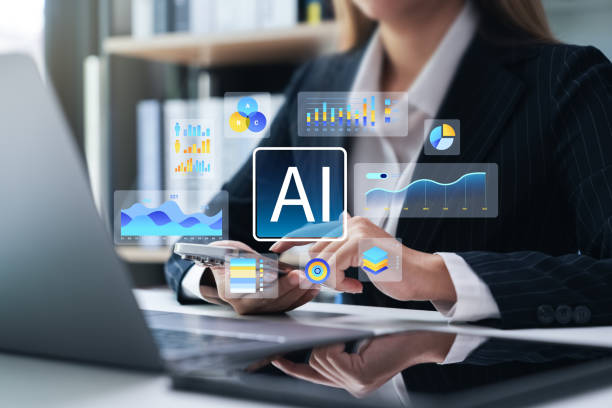
AI can also support deeper analysis of the primary financial statements.
Income statement analysis
AI can identify trends in:
- Revenue.
- Cost of sales.
- Gross profit.
- Operating expenses.
- EBITDA.
- Profit before tax.
- Net profit.
Rather than merely presenting the figures, an AI-assisted system can help identify relationships between them.
For example, revenue may rise by 15% while operating profit increases by only 3%. That gap could prompt investigation into pricing, input costs, payroll, distribution expenses, or overhead growth.
Balance sheet analysis
Balance sheet analysis can benefit significantly from pattern recognition.
AI can help accountants examine:
- Receivables ageing.
- Inventory movements.
- Payables trends.
- Fixed asset additions.
- Working capital.
- Debt movements.
- Accruals.
- Provisions.
- Equity movements.
Imagine that trade receivables have increased by 35% while revenue has increased by only 10%.
That doesn’t automatically mean something is wrong. However, it is a useful signal.
The accountant may investigate whether collection periods have increased, whether major customers have delayed payment, whether credit terms have changed, or whether revenue recognition requires additional attention.
AI helps surface the question. The accountant determines the answer.
Cash flow analysis
Profit and cash aren’t the same thing. That’s hardly news to an accountant, but it remains one of the most misunderstood areas of business reporting.
AI can help analyse relationships between:
- Profit and operating cash flow.
- Receivables and cash collections.
- Inventory and cash consumption.
- Payables and financing.
- Capital expenditure and investing cash flows.
- Debt movements and financing cash flows.
It can also highlight situations where reported profitability is increasing while operating cash flow is deteriorating.
That kind of insight can be extremely valuable to management.
AI for Financial Forecasting and Scenario Analysis
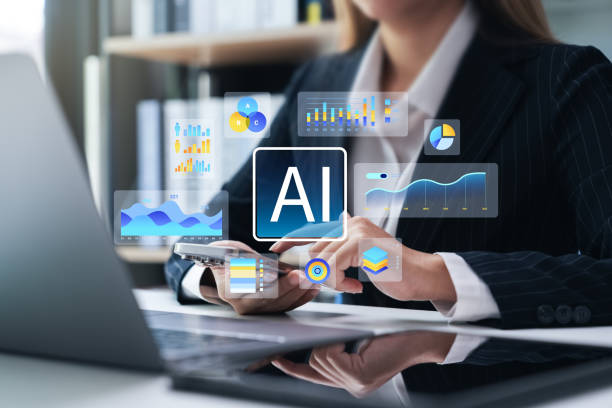
Financial reporting shouldn’t only explain what happened yesterday. It should help management think about tomorrow.
AI can support forecasting by analysing historical patterns and combining them with relevant business assumptions.
For example, an accountant could develop scenarios around:
- Revenue growth.
- Inflation.
- Payroll costs.
- Interest rates.
- Exchange rates.
- Customer collections.
- Inventory purchases.
- Capital expenditure.
Instead of producing one forecast, the finance team can model several scenarios.
Base case: Revenue grows moderately and costs remain stable.
Upside case: Revenue growth accelerates while operating costs remain controlled.
Downside case: Revenue declines while key costs increase.
AI can help generate and compare these scenarios, but assumptions should always be reviewed by professionals who understand the organisation.
A forecast isn’t valuable because a machine produced it. It’s valuable because the assumptions are reasonable, the model is transparent, and management can act on the results.
AI and Financial Reporting Quality

Used appropriately, AI can support financial reporting quality by helping accountants identify inconsistencies and exceptions earlier.
For example, AI could flag:
- Duplicate journal entries.
- Unusual journal descriptions.
- Transactions posted outside normal periods.
- Unexpected account combinations.
- Large manual adjustments.
- Significant fluctuations.
- Missing supporting documentation.
- Inconsistent classifications.
These alerts can become part of a broader review process.
However, AI should not be treated as an infallible quality-control mechanism.
A false negative is possible: the system may fail to identify a genuine issue.
A false positive is also possible: it may flag a perfectly legitimate transaction as suspicious.
Consequently, accountants need appropriate review procedures and escalation controls.
IFAC stresses that AI adoption introduces new risks and that accountants have an important role in maintaining controls, data integrity, and the quality of automated processes.
AI for IFRS Research and Accounting Judgement

Artificial intelligence can also support technical accounting research.
Accountants dealing with IFRS may use AI to:
- Summarise technical guidance.
- Generate research questions.
- Compare accounting treatments.
- Identify relevant standards to investigate.
- Explain complex accounting concepts in simpler language.
- Prepare preliminary technical memos.
- Create checklists for accounting assessments.
But there’s a major caveat.
AI shouldn’t be treated as the final authority on an accounting treatment.
For significant accounting judgements, accountants should consult authoritative standards, applicable regulations, professional guidance, and appropriate technical resources.
This is particularly important where the accounting treatment depends on specific facts and circumstances.
An AI tool might provide a plausible interpretation. That doesn’t make the interpretation authoritative.
The accountant must verify the relevant requirements before relying on the conclusion.
AI for Month-End and Year-End Reporting
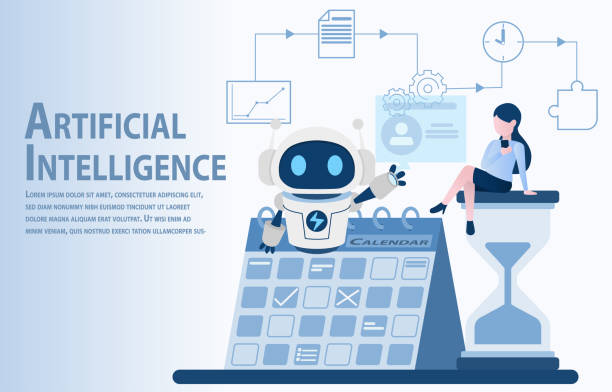
Month-end close is often where finance teams feel the pressure most intensely.
The clock is ticking. Reconciliations need to be completed. Accruals must be posted. Supporting schedules need updating. Variances have to be explained. Management wants the numbers yesterday.
AI can help streamline the close process.
A finance team could use AI to support:
- Reconciliation workflows.
- Exception identification.
- Accrual analysis.
- Variance explanations.
- Supporting-schedule reviews.
- Documentation.
- Management-report preparation.
- Checklist monitoring.
- Data-quality checks.
- Preliminary commentary.
The result can be a more organised reporting cycle.
Rather than spending most of the close manually moving information from one spreadsheet to another, accountants can spend more time reviewing significant balances and investigating unusual movements.
AI, Excel and Financial Reporting Automation

For many accountants, Excel remains one of the most important financial reporting tools.
That isn’t going away overnight.
Instead, Excel can become even more powerful when combined with automation, data analytics, Power Query, Power BI, and AI.
Consider a reporting process where an accountant:
- Imports data from multiple sources.
- Cleans the data with Power Query.
- Maps accounts to a standard chart of accounts.
- Generates a trial balance.
- Builds financial statements.
- Calculates financial ratios.
- Produces management dashboards.
- Uses AI to analyse unusual movements.
- Generates preliminary commentary.
That workflow is much more powerful than manually copying figures between worksheets.
For accountants developing AI Skills Employers Are Looking for in Young Professionals, the lesson is straightforward: don’t abandon the tools you already know. Learn how to connect them.
An accountant who combines accounting knowledge, advanced Excel, data analytics, Power BI, and AI can become significantly more productive.
AI for Audit Trails, Controls and Compliance
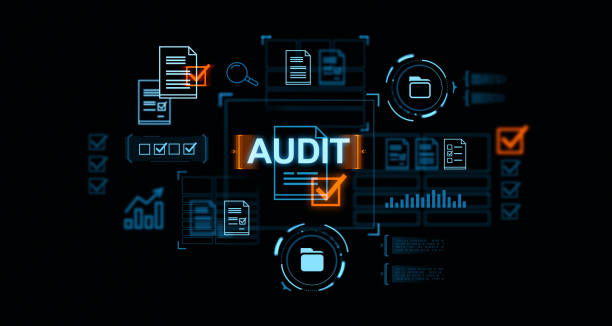
Financial reporting requires more than producing attractive dashboards.
It requires evidence.
Every significant number should be supported by appropriate documentation, and organisations need controls that reduce the risk of error or manipulation.
AI can support controls by identifying unusual activity and helping monitor large datasets.
For example, a control system could flag:
- Manual journal entries posted late at night.
- Transactions exceeding defined thresholds.
- Unusual vendor activity.
- Duplicate invoices.
- Unexpected changes in supplier bank details.
- Large period-end adjustments.
- Transactions outside normal approval patterns.
These capabilities can strengthen continuous monitoring.
However, organisations need clear policies around who can use AI, what information can be uploaded, how outputs are reviewed, and how decisions are documented.
ICAEW’s current guidance on AI in audit emphasises the importance of policies, training, oversight, confidentiality, and human involvement when AI is used in professional work.
The Risks Accountants Must Understand Before Using AI
AI isn’t a magic wand.
It introduces risks that accountants need to understand before integrating it into financial reporting.
Accuracy and hallucinations
Generative AI can produce information that sounds authoritative but is incorrect.
An AI-generated accounting explanation may contain a fabricated reference or misunderstand a technical requirement.
Every important output must therefore be verified.
Confidentiality
Financial information is sensitive.
Accountants should never casually upload confidential client information, payroll data, bank details, customer information, or unpublished financial results into an AI platform without understanding the tool’s data policies and organisational controls.
Bias
AI systems can reproduce biases present in their training data or inputs.
That matters when AI is used for forecasting, risk scoring, fraud detection, or decision support.
Lack of explainability
Some AI models can produce useful results without making the reasoning easy to understand.
For high-stakes financial decisions, accountants need sufficient transparency to understand and challenge the output.
Overreliance
Perhaps the biggest danger is psychological.
If an AI tool has been accurate twenty times, a user may become tempted to stop checking it on the twenty-first.
That’s exactly when professional scepticism matters.
Building an AI-Ready Financial Reporting Process

AI adoption works best when organisations start with a process rather than a shiny new tool.
Begin by asking:
Where are we losing time?
Then identify repetitive tasks.
Next ask:
Where are errors occurring?
Look for manual processes with high error rates.
Then ask:
Where would better analysis improve decisions?
This identifies areas where AI could provide meaningful value.
A practical implementation framework could look like this:
Step 1: Map the reporting process
Document the current process from transaction capture to final reporting.
Step 2: Identify repetitive tasks
Highlight activities involving repetitive data manipulation, classification, reconciliation, or documentation.
Step 3: Prioritise low-risk use cases
Start with tasks where AI can assist without making final accounting decisions.
Step 4: Establish controls
Define review requirements, access permissions, data rules, and approval responsibilities.
Step 5: Train accountants
Employees need practical training rather than vague instructions to “use AI.”
Step 6: Measure results
Track time saved, error rates, reporting turnaround time, exception rates, and user adoption.
Step 7: Expand carefully
Once the organisation understands what works, AI can be introduced into more sophisticated workflows.
This approach keeps technology grounded in business value.
The Human Skills That AI Cannot Replace

The irony of AI in accounting is that technological advancement can make human skills more important, not less.
An AI system can identify that expenses increased.
An accountant can walk into a management meeting and ask why.
An AI system can identify a receivables anomaly.
An accountant can understand the customer’s history and determine whether the movement makes commercial sense.
An AI system can generate financial commentary.
An accountant can decide whether that commentary accurately reflects the organisation’s circumstances.
That’s why communication, leadership, ethics, critical thinking, commercial awareness, and professional judgement remain essential.
IFAC has similarly emphasised that technology can allow finance professionals to focus more heavily on human strengths such as creativity, critical thinking, innovation, and judgement.Where Accountants Can Go Next
The accounting profession is moving toward a model in which accountants increasingly work as interpreters of data, business advisers, control specialists, and strategic partners.
AI is part of that transition.
For a young accountant, the goal shouldn’t be to become the person who knows every AI tool available. Tools change. Platforms change. Features change.
The more durable goal is to develop a combination of capabilities:
- Strong accounting fundamentals.
- Financial reporting knowledge.
- IFRS knowledge.
- Advanced Excel.
- Data analytics.
- Business intelligence.
- AI literacy.
- Prompt engineering.
- Critical thinking.
- Communication.
- Professional judgement.
- Risk management.
- Internal controls.
These capabilities reinforce one another.
An accountant who understands accounting but can’t work with modern technology may struggle to compete.
An accountant who understands technology but lacks accounting judgement may create equally serious problems.
The sweet spot is the combination.
Building These Skills Through Practical Learning

Professional development needs to move beyond theory.
An accountant should practise using AI on realistic financial reporting problems.
For example, take a fictional company’s monthly accounts and ask AI to:
- Identify significant variances.
- Analyse gross margin.
- Highlight unusual transactions.
- Generate management questions.
- Draft a preliminary commentary.
- Suggest financial ratios.
- Develop forecast scenarios.
- Create an executive summary.
Then verify every output.
This exercise teaches something that reading about AI cannot: how to use AI responsibly in an actual accounting workflow.
For learners preparing for professional qualifications such as ICAG, the same principle applies. Accounting standards and technical knowledge remain foundational, but technology skills can help learners analyze information faster and prepare for the changing expectations of employers.
KNOWSIA can play a useful role in this kind of practical professional development by helping learners connect accounting knowledge with modern digital skills.
What the Future of AI in Financial Reporting Could Look Like

Financial reporting is likely to become increasingly continuous.
Instead of waiting until the end of the month to discover that something has gone wrong, finance teams may increasingly monitor financial information throughout the reporting period.
AI could continuously:
- Monitor transactions.
- Detect anomalies.
- Update forecasts.
- Track key performance indicators.
- Identify emerging risks.
- Prepare draft commentary.
- Recommend areas for investigation.
- Support management dashboards.
The accountant’s role then shifts.
Rather than being primarily responsible for collecting and assembling information, the accountant becomes increasingly responsible for interpreting, challenging, validating, and communicating it.
That’s a significant professional upgrade.
The technology handles more of the mechanical work. The accountant focuses more heavily on the work that requires judgement.
ICAEW’s 2026 work on AI in corporate reporting also reflects the growing interest in how AI is being used in the production and oversight of annual reports and other corporate communications.
Related Topics for Accountants and Young Professionals

Developing the Skills Employers Actually Value
Technical qualifications remain important, but employers increasingly value professionals who can combine accounting expertise with communication, analytical thinking, adaptability, technology, and problem-solving. Understanding these broader professional capabilities can help young accountants prepare for careers where technology and human judgement work side by side.
Leading Teams in the Age of Artificial Intelligence
AI adoption isn’t simply a technology project. Managers and finance leaders must help teams understand why new tools are being introduced, establish appropriate controls, encourage experimentation, and maintain accountability. Strong AI leadership therefore requires both technological awareness and people-management skills.
Using AI for Better Financial Analysis
Financial reporting tells stakeholders what happened, while financial analysis helps explain what those results could mean. AI can help accountants examine trends, compare scenarios, identify unusual movements, and turn large datasets into useful questions for management.
Developing Practical AI Skills for the Modern Workplace
Young professionals don’t need to become programmers to benefit from AI. They do need to understand how to formulate good instructions, evaluate outputs, work with data, protect confidential information, and combine AI with professional expertise.
These capabilities can make the difference between simply using AI and using it effectively.
Final Thoughts
AI is changing financial reporting, but the biggest opportunity isn’t the replacement of accountants. It’s the transformation of what accountants spend their time doing.
Reconciliations can become faster. Variance analysis can become deeper. Forecasting can become more dynamic. Management reports can be produced more efficiently. Large datasets can be examined more intelligently.
But none of that removes the need for accounting expertise.
If anything, it raises the bar.
The accountants who thrive will be those who understand both sides of the equation: technology and judgement.
They’ll know how to use AI to process information, but they’ll also know when to challenge an AI-generated conclusion. They’ll automate repetitive tasks but maintain strong controls. They’ll use analytics to identify patterns but rely on professional judgement to interpret them.
That is the real value of developing the AI Skills Employers Are Looking for in Young Professionals.
For today’s accountant, the question isn’t whether AI belongs in financial reporting. It increasingly does.
The more important question is whether you are prepared to use it responsibly, intelligently, and strategically.
Further Reading
- IFAC: AI and Intelligent Automation for Professional Accountants — Practical perspective on how AI and intelligent automation can reshape accounting and finance work.
- IFAC: Artificial Intelligence & Accounting — A useful collection covering AI applications, generative AI, analytical AI, governance, and emerging developments.
- ICAEW: Artificial Intelligence Resources — Guidance and practical resources covering AI applications and risks for finance professionals.
- ICAEW: Applying AI in Financial Reporting — Guidance focused specifically on applying AI across financial reporting while maintaining effective controls.
- Microsoft: AI in Finance — An example of how AI is being applied to finance processes such as reconciliation, forecasting, and variance analysis.