
Financial forecasting has always been one of the most important responsibilities of accountants and finance teams. Yet, traditional forecasting can be painfully manual: spreadsheets are updated, assumptions are adjusted, historical trends are reviewed, and several versions of the forecast may be circulated before management finally gets a usable picture of what lies ahead. Today, artificial intelligence is changing that process. For young professionals, developing AI Skills Employers Are Looking for in Young Professionals can make financial forecasting faster, more analytical, and more responsive while allowing accountants to spend less time wrestling with data and more time interpreting it.
AI Skills Employers Are Looking for in Young Professionals in Financial Forecasting
Financial forecasting is moving from a largely spreadsheet-driven exercise toward a more dynamic, data-driven process. Modern AI forecasting systems can analyse historical information, identify patterns, incorporate new data, and continuously update projections. Predictive forecasting, for example, uses historical data and statistical or machine-learning models to project future financial and operational outcomes.
That shift is creating a new expectation for accountants.
Knowing how to prepare a budget is still important. Understanding accounting standards is still essential. Being able to reconcile accounts and interpret financial statements remains fundamental. But employers increasingly need accountants who can also work comfortably with data and emerging technologies.
This is where AI Skills Employers Are Looking for in Young Professionals become valuable.
An accountant using AI effectively should be able to:
- Understand the basics of artificial intelligence and machine learning.
- Prepare and validate data before it is analysed.
- Write clear prompts and instructions for generative AI tools.
- Interpret AI-generated forecasts.
- Challenge unusual or unsupported results.
- Build and compare financial scenarios.
- Understand forecasting assumptions.
- Combine AI with Excel, Power BI, ERP systems, and other finance technologies.
- Protect confidential financial information.
- Apply professional judgement when reviewing AI outputs.
The key point is simple: accountants don’t need to surrender their expertise to AI. They need to combine that expertise with AI.
AI Skills Employers Are Looking for in Young Professionals: Why Forecasting Matters

A financial forecast answers a deceptively simple question:
What might happen next?
The answer affects almost everything a business does.
Management may use forecasts to decide whether to hire employees, purchase inventory, expand operations, acquire equipment, borrow money, reduce costs, or enter a new market.
A weak forecast can lead to excess inventory, cash shortages, unnecessary borrowing, or missed opportunities.
A useful forecast, on the other hand, can give management time to act.
AI strengthens this process by allowing finance teams to examine much larger datasets and identify patterns that may be difficult to detect manually. AI-enabled FP&A tools can support predictive forecasting, scenario planning, anomaly detection, and variance analysis.
For example, imagine that a company has experienced steady revenue growth for three years. A traditional forecast might simply apply a percentage increase to last year’s revenue.
An AI-assisted approach could examine:
- Historical sales.
- Seasonal patterns.
- Customer behaviour.
- Product-level performance.
- Regional sales.
- Pricing changes.
- Economic indicators.
- Promotional activity.
- Changes in operating costs.
Suddenly, the forecast becomes more than a number copied from last year’s spreadsheet.
It becomes an analytical model.
What Is AI Financial Forecasting?
AI financial forecasting is the use of artificial intelligence, machine learning, predictive analytics, and related technologies to estimate future financial outcomes.
The process typically starts with historical data. AI models then identify relationships, trends, seasonality, anomalies, and other signals that may help estimate future results.
Forecasting can cover many areas, including:
- Revenue.
- Expenses.
- Cash flow.
- Working capital.
- Sales volume.
- Accounts receivable.
- Inventory.
- Payroll.
- Capital expenditure.
- Profitability.
- Liquidity.
Unlike a static spreadsheet forecast, AI-powered forecasting can be updated as new information becomes available.
This is particularly useful in volatile environments.
If actual sales suddenly fall, for example, the forecast can be recalculated using the latest information rather than waiting until the next formal forecasting cycle.
That doesn’t mean the AI automatically knows the future. Nobody does.
Rather, it means the finance team has a faster mechanism for incorporating new evidence into its expectations.
How AI Forecasting Works for Accountants

The process can be understood in five broad stages.
1. Define the forecasting objective
Before opening an AI tool, determine what you’re actually trying to forecast.
Are you forecasting:
- Monthly revenue?
- Annual profit?
- Cash flow?
- Customer collections?
- Payroll costs?
- Inventory requirements?
The forecasting objective determines the data and methodology required.
2. Collect the data
AI requires appropriate data.
For financial forecasting, this could include historical accounting records, sales information, budgets, operational data, customer information, and relevant external indicators.
The more useful and relevant the data, the more meaningful the forecast is likely to be.
3. Clean and prepare the data
This step is often underestimated.
If revenue is recorded differently across periods, dates are inconsistent, duplicate transactions exist, or account classifications have changed, the model can produce misleading results.
Garbage in, garbage out still applies—even when the garbage is processed by sophisticated AI.
Accountants are therefore particularly well positioned here because they understand the financial meaning behind the data.
4. Generate the forecast
AI models analyse the available information and produce projections.
Depending on the system, the output could include a point forecast, a range of possible outcomes, confidence intervals, probabilities, or multiple scenarios.
5. Review and interpret
This is where the accountant’s expertise becomes indispensable.
The forecast must be compared against known business realities.
If the AI predicts a 40% increase in revenue but the company has lost its largest customer, something clearly needs investigating.
The model provides evidence.
The accountant provides judgement.
Using AI to Forecast Revenue

Revenue forecasting is one of the most obvious applications of AI.
Traditional approaches may rely heavily on historical growth rates, management assumptions, sales pipelines, and seasonality.
AI can examine those factors alongside much larger datasets.
For example, a company selling consumer products might have five years of monthly sales data. An AI model could identify seasonal peaks, recurring slow periods, product-specific trends, and unusual sales movements.
The accountant could then compare the AI forecast with management’s expectations.
Suppose management expects sales to increase by 15%, while the AI model projects 8%.
That’s not necessarily a disagreement to be ignored.
It’s a conversation starter.
The accountant should ask:
- What assumptions are driving management’s 15% expectation?
- Is there a new product launch?
- Has pricing changed?
- Are additional distribution channels being introduced?
- Has customer demand weakened?
- Does the historical data contain an unusual period?
This is one of the biggest advantages of AI forecasting.
It can challenge assumptions.
AI for Expense Forecasting
Expense forecasting can be more complicated than simply applying last year’s percentage increase.
Different expenses behave differently.
Some are fixed.
Others vary with revenue.
Some are seasonal.
Others are influenced by inflation, exchange rates, headcount, production volumes, or contractual commitments.
AI can help identify these relationships.
For instance, payroll expenses may be linked to headcount and salary levels, while electricity costs may be linked to production volume and energy prices.
Rather than treating every expense line as an independent percentage, AI-assisted forecasting can help finance teams understand the underlying drivers.
This supports driver-based forecasting.
Instead of saying:
“Administrative expenses will increase by 10%.”
the finance team might say:
“Administrative expenses are expected to increase primarily because of planned recruitment, salary adjustments, and higher software subscriptions.”
That is much more useful for management.
AI for Cash Flow Forecasting
Profitability doesn’t guarantee liquidity.
A profitable company can still run out of cash if customers don’t pay on time, inventory consumes cash, or debt obligations become due.
That’s why cash flow forecasting deserves special attention.
AI can help finance teams analyse:
- Historical cash receipts.
- Customer payment patterns.
- Supplier payment cycles.
- Payroll obligations.
- Loan repayments.
- Tax payments.
- Capital expenditure.
- Recurring operating costs.
Modern financial systems are increasingly incorporating intelligent cash-flow forecasting. For example, Microsoft describes AI-enabled finance capabilities that monitor cash flow and identify current and future trends.
Imagine an accountant notices that trade receivables have increased significantly.
An AI-assisted system might identify which customers are responsible for the movement and analyse historical payment behaviour.
That information could then feed into the cash forecast.
Instead of merely reporting that receivables increased, the finance team can estimate the likely impact on future liquidity.
That’s a much stronger management insight.
AI for Scenario Planning

A single forecast isn’t always enough.
Businesses operate under uncertainty, so accountants should increasingly think in scenarios.
AI can help finance teams create “what-if” models around multiple variables. Current AI-enabled FP&A applications support scenario planning involving factors such as changing demand, interest rates, and supply-chain disruptions.
Consider three scenarios.
Base Case
Revenue grows moderately, gross margins remain stable, and operating costs increase in line with inflation.
Optimistic Case
Revenue grows faster, customer collections improve, and operating costs remain controlled.
Downside Case
Revenue declines, costs increase, and customers take longer to pay.
The accountant can compare the resulting effects on:
- Profit.
- Cash flow.
- Working capital.
- Debt.
- Liquidity.
- Capital requirements.
Management can then ask the question that really matters:
What should we do if the downside scenario begins to materialise?
Forecasting becomes a decision-making tool rather than a reporting ritual.
AI for Financial Modelling

Financial modelling has traditionally depended heavily on spreadsheets.
Excel remains extremely useful because it provides transparency, flexibility, and control. But complex models can become difficult to maintain when data changes frequently.
AI-powered financial modelling can help automate data handling, identify patterns, update projections, and support scenario analysis. Modern AI financial modelling approaches can combine machine learning, predictive analytics, natural language processing, and time-series forecasting techniques.
For accountants, the best approach isn’t necessarily to replace Excel.
It’s to make the workflow smarter.
For example:
ERP → Power Query → Excel Model → Power BI Dashboard → AI Analysis → Management Decision
This kind of integrated workflow can significantly reduce manual effort.
A professional who understands how those technologies connect has a considerable advantage over someone who relies entirely on manual spreadsheet manipulation.
AI and Predictive Analytics for Accountants
Predictive analytics and AI forecasting are related but aren’t exactly the same.
Predictive analytics asks broader questions about what is likely to happen and why.
Forecasting focuses more specifically on projecting measurable future outcomes.
For accountants, predictive analytics could be used to identify:
- Customers likely to pay late.
- Products likely to experience declining demand.
- Expenses likely to exceed budget.
- Accounts likely to require additional review.
- Business units likely to miss targets.
The resulting insights can then feed into the financial forecast.
In other words, predictive analytics can help explain the forces behind the forecast.
AI Forecasting and Financial Reporting

Forecasting doesn’t exist in isolation from financial reporting.
Historical financial reports provide the foundation from which forecasts are developed.
Actual results are compared with forecasts.
Variances are investigated.
Forecast assumptions are revised.
The cycle then repeats.
AI can support this continuous feedback loop.
For example:
Actual results → Variance analysis → AI pattern detection → Revised assumptions → Updated forecast → Management action
This makes financial planning more responsive.
AI is already being used across financial reporting to analyse historical transactions and operational information, identify trends, model potential outcomes, and support more forward-looking reporting.
How Accountants Should Validate AI Forecasts
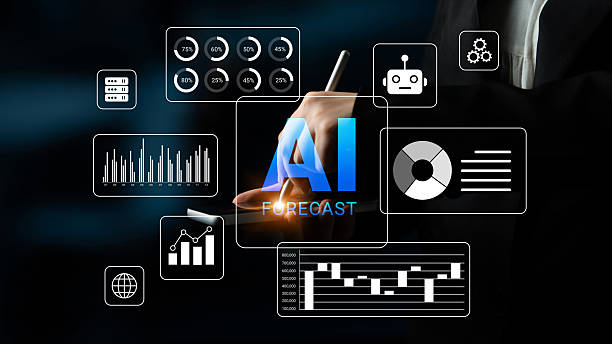
Here’s where accountants must resist the temptation to become overly impressed by technology.
A forecast isn’t automatically reliable because it came from an advanced AI model.
It must be tested.
Ask:
Is the data accurate?
Check the source data, periods, classifications, and completeness.
Are the assumptions reasonable?
A model can produce a technically correct result from unreasonable assumptions.
Does the forecast make commercial sense?
Accountants should understand the organisation’s operations, customers, competitors, and market.
How accurate have previous forecasts been?
Compare previous predictions with actual results.
What changed?
If the new forecast differs significantly from the previous one, identify why.
Can the result be explained?
Finance leaders need to understand the drivers behind major changes.
Human oversight and validation remain essential in predictive forecasting because model outputs need to be reviewed against business context and known conditions.
The Risks of AI Financial Forecasting

AI brings opportunities, but it also introduces risks.
Poor-quality data
Incorrect historical data can contaminate the forecast.
Overfitting
A model can become too closely aligned with historical patterns and struggle when circumstances change.
Unexpected market conditions
A model trained on historical data cannot automatically anticipate unprecedented events.
Bias
If historical data contains biases, an AI model can reproduce them.
Lack of transparency
Some sophisticated models can be difficult for users to understand.
False confidence
Perhaps the greatest danger is assuming that a numerical forecast is an objective fact.
It’s not.
A forecast is an estimate based on assumptions, data, and methodology.
That’s why accountants should communicate uncertainty rather than pretending that AI has eliminated it.
Data Governance and Confidentiality
Accountants deal with sensitive information every day.
That includes:
- Payroll records.
- Customer information.
- Supplier details.
- Bank information.
- Tax information.
- Management accounts.
- Budgets.
- Strategic plans.
- Unpublished financial results.
Before using an AI system, organisations should understand where information is processed, who can access it, how it is retained, and what controls exist around its use.
AI adoption should therefore be accompanied by clear governance policies.
Accountants should also understand that convenience isn’t a substitute for confidentiality.
If you’re using an external AI tool to analyse financial information, check the organisation’s approved-use policies before uploading anything sensitive.
A Practical AI Financial Forecasting Workflow for Accountants
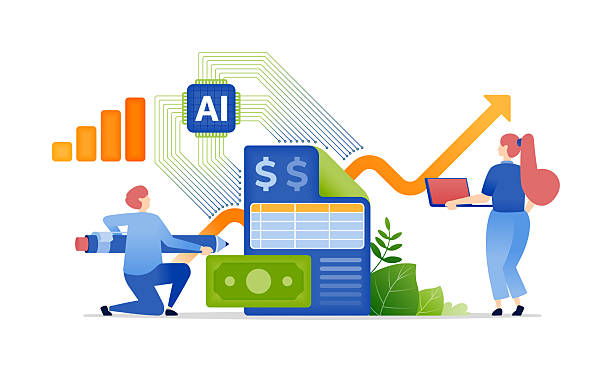
A practical workflow could be built around seven stages.
Step 1: Define the objective
Decide exactly what you’re forecasting and why.
Step 2: Gather historical data
Collect relevant financial and operational information.
Step 3: Clean the dataset
Remove duplicates, correct errors, standardise classifications, and validate totals.
Step 4: Identify forecasting drivers
Determine what actually influences the financial outcome.
Step 5: Generate an AI-assisted forecast
Use an appropriate forecasting model or AI-enabled finance platform.
Step 6: Challenge the results
Compare the forecast with management assumptions, historical performance, market information, and professional judgement.
Step 7: Monitor actual performance
Once actual results become available, compare them with the forecast.
This final step is crucial.
Forecasting should be a learning process.
If the forecast consistently misses actual results, the model, data, assumptions, or business drivers need to be reviewed.
AI Skills Employers Are Looking for in Young Professionals: The Accountant of Tomorrow
The future accountant won’t simply be someone who knows how to prepare financial statements.
The profession is moving toward a broader skill set.
Young accountants should consider developing capabilities in:
- Artificial intelligence.
- Advanced Excel.
- Power Query.
- Power BI.
- Data analytics.
- Financial modelling.
- Forecasting.
- Business intelligence.
- Automation.
- IFRS.
- Communication.
- Critical thinking.
- Commercial awareness.
This combination is powerful.
An accountant who understands financial reporting can interpret the numbers.
An accountant who understands data analytics can explore the numbers.
An accountant who understands AI can automate and enhance the analysis.
And an accountant with strong communication skills can turn those insights into decisions.
That’s precisely why AI Skills Employers Are Looking for in Young Professionals should be viewed as part of a broader professional-development strategy rather than a standalone technical skill.
Developing Practical AI Skills Through Professional Learning
Learning AI shouldn’t stop at watching demonstrations.
Accountants need practice.
A practical exercise could involve taking three years of historical revenue, expenses, and cash-flow information and building a forecast.
The accountant could then:
- Clean the data in Excel or Power Query.
- Analyse historical trends.
- Identify seasonality.
- Build a traditional forecast.
- Generate an AI-assisted forecast.
- Compare the two approaches.
- Develop optimistic, base, and downside scenarios.
- Test the forecast against actual results.
- Create a Power BI dashboard.
- Present the findings to management.
This approach turns AI from a buzzword into a working professional capability.
For learners preparing for professional qualifications such as ICAG, combining accounting knowledge with technology and analytical skills can also provide a stronger foundation for the changing workplace.
KNOWSIA, as an e-learning platform, can support this type of practical learning by connecting professional education with the digital skills accountants increasingly need.
What AI Financial Forecasting Means for the Future of Accounting
AI isn’t going to make forecasting effortless.
It will, however, change what effort looks like.
The accountant of the future may spend less time gathering information and more time evaluating it.
Less time updating repetitive spreadsheets.
More time challenging assumptions.
Less time calculating basic variances.
More time explaining what those variances mean.
Less time preparing numbers for management.
More time helping management decide what to do next.
That is a meaningful shift.
The technology can process enormous quantities of information, but it doesn’t understand the organisation in the same way an experienced professional does. Human judgement remains necessary to determine whether a forecast is sensible, whether an assumption is realistic, and whether a recommended action fits the company’s objectives and risk appetite.
The strongest finance teams will therefore combine both capabilities.
Related Topics Worth Exploring
How Accountants Can Use AI to Improve Financial Reporting
Financial forecasting is only one part of the broader transformation taking place in finance. AI can also support financial reporting by helping accountants analyse transactions, identify anomalies, automate repetitive processes, and prepare management insights. The real opportunity is to connect forecasting with reporting so that historical results continuously inform future expectations.
AI Leadership: Leading Effectively in the Age of Artificial Intelligence
Technology adoption requires more than buying software. Finance managers and business leaders must create the right environment for employees to experiment, learn, challenge AI outputs, and use technology responsibly. Effective AI leadership is therefore becoming an important management capability.
AI Skills Employers Are Looking for in Young Professionals
Technical accounting knowledge remains important, but young professionals increasingly need digital fluency as well. AI literacy, data analysis, automation, critical thinking, communication, and adaptability can help professionals remain valuable as routine tasks become increasingly automated.
How Accountants Can Use AI for Financial Analysis
Forecasting tells finance teams what could happen next, while financial analysis helps them understand the information behind the numbers. AI can assist accountants in identifying trends, comparing periods, analysing ratios, and generating questions that lead to deeper financial insight.
Final Thoughts
AI for financial forecasting isn’t about handing the finance function over to a machine.
It’s about giving accountants better tools to work with information.
Used properly, AI can help finance teams process data faster, identify patterns earlier, test scenarios more efficiently, and produce forecasts that are more responsive to changing conditions. Predictive forecasting tools can integrate historical data with new information and continuously refine projections, while human review remains essential for validation and business context.
But technology alone won’t produce a good forecast.
Good forecasting still depends on good data, sensible assumptions, strong financial knowledge, sound controls, and professional judgement.
That’s why the future belongs neither to accountants who ignore AI nor to professionals who blindly trust it.
It belongs to accountants who know how to use it.
For young finance professionals, that means developing the AI Skills Employers Are Looking for in Young Professionals alongside accounting, analytical, and communication capabilities. The combination can turn an accountant from a preparer of historical information into a professional who helps organisations understand what may happen next—and, more importantly, decide what to do about it.
Recommended External Resources
- IFAC: AI and Intelligent Automation for Professional Accountants — Provides professional-accountancy perspectives on AI, intelligent automation, and the changing role of accountants.
- IBM: What Is Predictive Forecasting? — Explains predictive forecasting, its relationship with predictive analytics, data integration, and human oversight.
- IBM: AI in Financial Planning and Analysis — Covers AI applications in FP&A, including forecasting, scenario planning, and anomaly detection.
- Microsoft: AI in Finance — Provides examples of AI applications across finance, including forecasting, reconciliation, and variance analysis.
- IBM: AI Financial Modeling — Explores how AI, machine learning, predictive analytics, and other technologies are being applied to financial modelling.
SEO note: The XML you supplied contains the focus keyword but has no entries under <Related Keywords>, <longtail keywords>, or <Cluster Articles>. I therefore haven’t fabricated additional keywords or future article titles. I have also used the exact focus keyword in the first paragraph and in multiple H2/H3 headings as requested.