
Question
Answer
i) Compare and contrast the compliance based approach and the integrity based approach in the management of ethical issues. (6 marks)
Compliance-based approach A compliance-based approach is primarily designed to ensure that the company acts within the letter of the law and that violations are prevented, detected and punished. Some organizations faced with the legal consequences of unethical behaviour take legal precautions such as those below; Compliance procedures Audits of contracts Whistleblower Opportunities Disciplinary procedures
Corporate compliance is limited in that it refers only to the law but legal compliance is not an adequate means for addressing the full range of ethical issues that arise every day. This is especially the case where voluntary codes of conduct and self-regulation are perhaps more prevalent.
Integrity-based approach An integrity-based approach combines a concern for the law with emphasis on managerial responsibility for ethical behaviour. Integrity strategies strive to define companies guiding values, aspirations and patterns of thought and conduct. When integrated into day-to-day operations of an organization, such strategies can help prevent damaging ethical lapses, while taping into powerful human impulses for moral thought and action. An integrity based approach to ethics treats ethics as an issue of organization culture.
Ethics management has several tasks; To define and give life to an organization’s defining values To create an environment that supports ethically sound behaviour To instil a sense of shared accountability amongst employees
The table below indicates some of the differences between the two approaches;
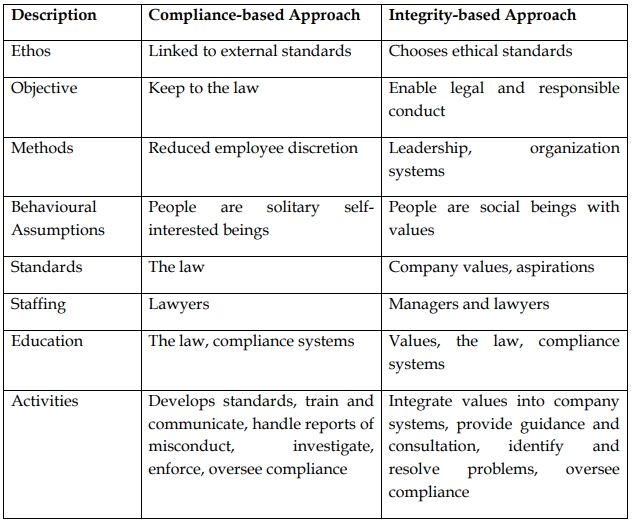
In conclusion, mere compliance with the law is no guide to exemplary behaviour, an integrity-based approach incorporates ethics into corporate culture and systems.
ii) Discuss the steps you would recommend to your company to adopt in order to sustain value creation from an ethical culture. (4 marks)
The following is a set of key actions required to help organizations maximize the value from ethical performance within an ethical culture.
Make it a strategic priority Set the tone from the top Develop a code of ethics Develop and support routes to report suspected violations Engage and communicate Focus on training Measure effectiveness and revisit regularly