
Business planning requires more than a good idea; it demands analytical thinking, adaptability, communication, and sound decision-making. In fact, AI Skills Employers Are Looking for in Young Professionals are increasingly connected to how effectively people can use technology to solve practical business problems. Our guide, Essential Skills Every Young Professional Needs, explores the broader capabilities professionals need to thrive in a changing workplace. This article takes that conversation into business planning, showing how AI can help entrepreneurs and professionals research markets, analyse data, forecast performance, identify risks, and build more practical strategies.
How AI Skills Employers Are Looking for in Young Professionals Apply to Business Planning

Modern business planning isn’t simply about filling out a template and making optimistic revenue projections. It involves asking better questions, interpreting information, testing assumptions, and turning evidence into action. That’s where artificial intelligence can make a real difference.
AI tools can process large amounts of information quickly, identify patterns, generate scenarios, and help users organise complex ideas. The U.S. Small Business Administration also notes that AI can support small businesses with decision-making, repetitive tasks, content creation, and even drafting business plans. (legacy.sba.gov)
For young professionals, this makes AI literacy increasingly valuable. Someone who understands finance, marketing, operations, and strategy—and can use AI responsibly to analyse information—can contribute far more effectively to planning discussions.
How to Use AI Skills Employers Are Looking for in Young Professionals for Business Planning

The first step is to treat AI as a planning assistant, not as the person running the business. Start by defining the business problem clearly. Then provide relevant information and ask AI to help structure your thinking.
For example, an entrepreneur considering a new training programme could ask AI to help identify:
- Target customer segments
- Competitor categories
- Potential pricing strategies
- Revenue assumptions
- Marketing channels
- Operational requirements
- Possible business risks
AI can then organise these ideas into a preliminary framework. However, the information should be checked before it becomes part of a final plan.
A useful starting point is the U.S. Small Business Administration’s business planning guidance, which explains how a business plan can serve as a roadmap for starting, managing, and growing a business. (legacy.sba.gov)
1. Use AI for Market Research
Market research is one of the most time-consuming parts of business planning. AI can help you structure research questions, analyse customer feedback, categorise competitors, and identify emerging trends.
Suppose you’re launching an online accounting course. Instead of simply asking AI, “Is this business profitable?”, provide specific information about your audience, competitors, pricing, delivery model, and target market.
The better the input, the more useful the output.
AI can also help develop customer personas and compare different market segments. Still, AI-generated information shouldn’t automatically be treated as verified market evidence. Real customer interviews, industry reports, surveys, and reliable datasets remain essential.
2. Use AI for Financial Forecasting
Financial projections are central to business planning. AI can help entrepreneurs examine historical revenue, expenses, customer growth, pricing assumptions, and cash-flow patterns.
For example, AI can help create scenarios such as:
Base case: sales grow steadily.
Optimistic case: customer acquisition exceeds expectations.
Conservative case: sales grow slowly while operating costs increase.
Predictive forecasting tools can analyse historical data and generate forward-looking insights that support decisions about resources, growth, and risk. (ibm.com)
However, AI shouldn’t be allowed to invent financial assumptions. Revenue growth, tax rates, salaries, financing costs, and other important figures should come from credible business data.
For professionals with accounting or finance backgrounds, this is especially powerful. AI can handle repetitive analysis while the professional focuses on interpretation, judgement, and strategy.
3. Use AI for SWOT and Competitive Analysis
A SWOT analysis examines strengths, weaknesses, opportunities, and threats. AI can help you brainstorm each category and challenge assumptions.
For instance, a small e-learning company might identify strong instructor expertise as a strength, limited marketing resources as a weakness, growing demand for professional education as an opportunity, and increasing competition as a threat.
The real value comes from asking AI to challenge the analysis.
Instead of saying, “Give me five strengths,” ask, “What assumptions might I be making about my competitive advantage, and what evidence would prove or disprove them?”
That turns AI from a content generator into a thinking partner.
4. Use AI for Scenario Planning
Business conditions change quickly. A plan that looks excellent today may become unrealistic after a change in customer demand, exchange rates, regulation, technology, or competition.
AI can help create multiple scenarios and test how changes could affect the business.
For example:
- What happens if sales fall by 15%?
- What happens if operating costs rise by 10%?
- What happens if customer acquisition doubles?
- What happens if a major competitor reduces prices?
- What happens if the business launches in another market?
This approach encourages flexibility instead of blind commitment to one forecast.
IBM notes that AI-powered business planning can support sales planning, budgeting, forecasting, and faster decision-making. (ibm.com)
5. Use AI to Identify Business Risks
Every business plan contains assumptions—and every assumption carries risk.
AI can help identify risks involving cash flow, customers, suppliers, staffing, technology, competition, compliance, and operations. It can also help create risk registers that rank potential problems according to likelihood and impact.
Yet risk analysis must remain human-led. AI can overlook context or produce confident-sounding conclusions from incomplete information.
That’s why responsible AI use matters. The OECD AI Principles emphasise transparency, robustness, security, accountability, privacy, and human oversight. (OECD)
How AI Skills Employers Are Looking for in Young Professionals Improve Decision-Making

The biggest advantage of AI in business planning isn’t simply speed. It’s the ability to explore more possibilities before making a decision.
A young professional can use AI to compare strategies, summarise research, build financial scenarios, identify unanswered questions, and prepare presentations. The professional then applies judgement to decide what actually makes sense.
This distinction matters.
AI can suggest that a business should enter a new market. It cannot fully understand the entrepreneur’s risk appetite, relationships, reputation, values, or long-term vision.
In other words, AI can accelerate the thinking process, but responsibility still belongs to the decision-maker.
Practical AI Tools for Business Planning
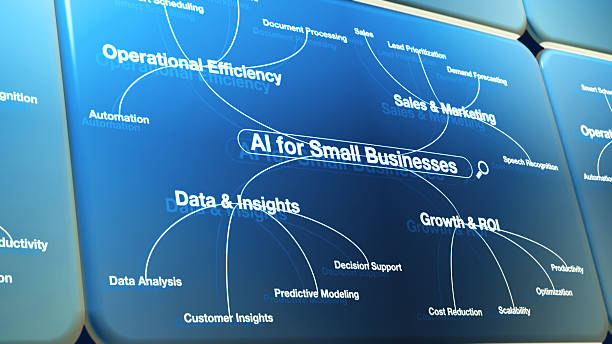
Different tools can support different stages of planning. Generative AI assistants can help with brainstorming, research structures, summaries, and scenario development. Spreadsheet-based AI features can assist with analysing financial data, while business intelligence platforms can help turn datasets into dashboards and visual insights.
For professionals, combining AI with Excel, Power BI, accounting software, and other analytical tools can create a powerful planning workflow.
The goal isn’t to collect dozens of AI tools. It’s to build a simple system that solves real problems.
Common Mistakes to Avoid
AI business planning can go wrong when users rely on it blindly.
First, don’t enter confidential customer, employee, or financial information into an AI system without understanding its privacy controls.
Second, don’t accept AI-generated statistics without verification.
Third, don’t confuse a polished business plan with a viable business.
Finally, don’t remove human judgement from important decisions. AI should strengthen analysis—not replace accountability.
Final Thoughts
AI is changing how businesses research, forecast, analyse risks, and make strategic decisions. For young professionals, developing AI Skills Employers Are Looking for in Young Professionals can therefore create a practical advantage far beyond simply knowing how to use a chatbot.
The strongest approach is straightforward: define the problem, provide quality data, use AI to explore possibilities, verify important information, and apply human judgement before making decisions. For entrepreneurs and professionals using KNOWSIA and other learning resources to build modern business capabilities, AI should become another tool in the toolbox—not a substitute for knowledge, experience, or critical thinking.
When used thoughtfully, AI can make business planning faster, more analytical, and far more adaptable. And that’s the real opportunity: not letting AI plan the business for you, but using AI to become a better planner.