
Question
Answer
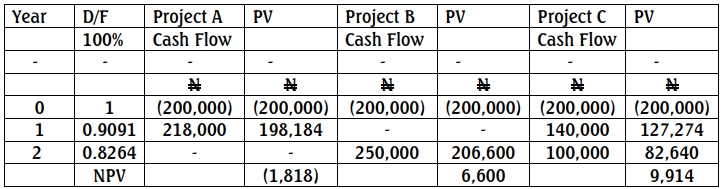
Project A – The negative NPV indicates that the project would fail to make the
expected return of 10%.
Project B -The positive NPV indicates that the project will earn more than the required
rate of return of 10%.
Project C: The positive NPV indicates that the project will earn more than the
required rate of return of 10%.
Conclusion:Project B has an NPV of N6,600 while project C has NPV of N9,914 both
positive. Project C should be undertaken because it has a higher positive NPV.
b. Main Features of Cost-Benefit Analysis (3 Marks)
- Analytical Decision-Making Tool: Used in public projects for comparing costs and benefits systematically.
- Monetary Valuation: Assesses project costs and benefits in monetary terms.
- Discounting Process: Uses social discount rates to value benefits and costs over time for long-term public projects.