
Question
Answer
a. Using a Forward Rate Agreement (FRA)
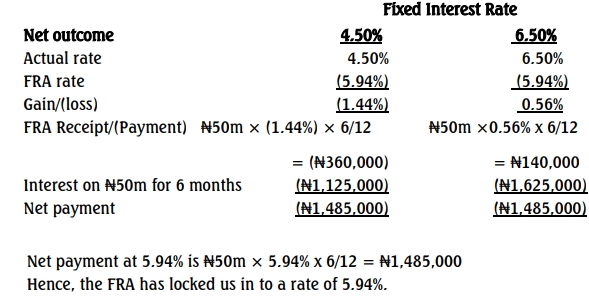
An FRA allows Katangwa Limited to lock in an interest rate for a future loan, reducing the risk of rising interest rates.
i. If interest rates rise to 6.50%:
– Katangwa can benefit from the FRA by paying the pre-agreed lower rate (e.g., 5.82%) instead of the increased market rate. – The bank compensates the company for the difference between the market rate (6.50%) and the agreed FRA rate, thereby effectively lowering their borrowing cost.
b. Comparison with Interest Rate Futures
- Flexibility: Interest rate futures offer more flexibility than FRAs, as they can be traded on exchanges before maturity.
- Liquidity: Futures contracts generally provide greater liquidity.
- Precision: FRAs offer precise rate hedging tailored to the company’s specific borrowing dates and amounts, unlike standard futures.
- Cash Flow Impact: With futures, margin requirements apply, which may affect cash flow, while FRAs are settled only at contract maturity.
c. Interest Rate Guarantees or Short-Term Interest Rate Cap
- An interest rate cap allows Katangwa to benefit from falling rates while setting a maximum cap if rates rise above a specified level.
- The cap involves a premium but ensures that interest expenses remain manageable.
- With a rate guarantee or cap, Katangwa limits exposure to high rates while maintaining flexibility to benefit if rates decrease.